Part 1 of 4 What Does Acemannan Actually Do?
Part 2 of 4 Is below . . .
Part 3 of 4 The Other Side of the Acemannan Patent Story: From Skeptic to Advocate
Part 4 of 4 Why Were They So Excited?
Inside U.S. Patent 5,308,838 and Its Extraordinary Range of Uses
Expanding the Scientific Investigation
After Patent 5,106,616 was issued, the same three inventors received another United States patent.
Bill H. McAnalley. Robert H. Carpenter. Harley R. McDaniel.
Received Patent 5,308,838.
Issued May 3, 1994. Before that year was out Acemannan would be taken officially to market.
The title of this patent is : Uses of Aloe Products.
The complete patent file before us is 44 pages long
This time there are only 2 figures. There are 15 numbered tables. But there are an extraordinary 51 examples.
Fifty-one.
If the science isn’t remarkable enough the examples recorded in this patent certainly are.
And before we examine any of them, I want to begin exactly where the patent begins.
With the first sentence of the abstract.
Because I consider this one of the most consequential sentences in the entire Acemannan story. And that means we are going to dig deeper and reach wider.
“Acemannan has been shown to be effective in treating a number of conditions where the principal mechanism of resolution or cure requires intervention by the patient’s immune system.”
The sentence does not say: Acemannan might one day be useful.
It does not say: Scientists hope it will work.
The inventors wrote: “Acemannan has been shown to be effective…”
Though this has obvious implications in medical fields of study, the first sentence itself is not asking us to think medically; it is, instead, forcing us to think in natural biological characteristics that already exist in the human body. Placed there by the Creator Himself. The sentence itself says that Acemannan effectiveness REQUIRES the immune system
This makes the second half of that sentence even more important than the first.
They did not say Acemannan was effective because all diseases are alike.
They said the biological conditions, when any and all maladies and diseases are present, had something else in common: Their resolution or cure required intervention by the patient’s immune system.
That changes the question.
Instead of asking: “How could one substance relate to so many completely different diseases?” wrong question
Ask: “What do those diseases, these conditions, these maladies, if they are to be dealt with appropriately, require from the body?” Do they need a prescription medication, an over-the-counter drug, a surgery? In some cases, maybe so
But if you remember the previous and first video in this series. An infection, a wound and a burn may be completely different problems, but all involve defense, communication, inflammation and repair; in other words, all of them require the immune system
We are not looking to find common characteristics among all the maladies mentioned. We are looking to focus on something different.
It means we are embracing an already established fact that the same biological system, your immune system, will be needed and it will need to be activated to address every one of them.
And that appears to be the organizing idea behind this patent.
Patent One and Patent Two
This is where the two patents fit together beautifully.
Patent 5,106,616 asked:
What does Acemannan do?
Patent 5,308,838 asks:
Where might those effects matter?
And suddenly the enormous breadth of the second patent makes more sense.
The abstract immediately mentions cancer, viral diseases, respiratory disease, immune-regulatory disease, inflammation, infections and infestations.
Then the patent begins opening doors.
Lots of them.
Only Two Figures—Both About HIV and AZT
Unlike the first patent, this one contains only two figures.
Both deal with HIV-infected cells and the combination of Acemannan and AZT, or zidovudine.
The question was whether using the two together could produce greater protection than expected from either treatment alone.
The patent describes the effect as synergistic.
Synergy simply means that two things working together produce an effect greater than we would expect from just adding their individual effects.
There is another video at this website that helps cover that idea. The link is in the transcription below.
Again, this was cell-culture research.
But notice the direction of the thinking.
The researchers were not necessarily imagining Acemannan replacing conventional therapy.
They were also asking whether it might work alongside other treatments.
That concept repeats throughout this patent.
Then Comes Table 1
And Table 1 may be one of the most visually impressive parts of the entire document.
The patent begins defining viruses within the contemplated scope of the invention.
And then the names keep coming.
Herpes simplex.
Varicella-zoster.
Cytomegalovirus.
Epstein-Barr.
Hepatitis B.
Influenza.
Mumps.
Measles.
Rabies.
Respiratory syncytial virus.
Dengue.
Yellow fever.
West Nile.
Zika.
Ebola.
Marburg.
HIV.
And many, many others.
I am not going to read this list.
That would take too long.
Instead, I am going to leave it on the screen.
Pause the video if you want to study it.
But here is the qualification that must accompany it:
The fact that a virus appears on this list does not mean the inventors conducted a separate successful Acemannan treatment study against every virus named.
The list defines the broad antiviral territory contemplated by the patent.
That distinction is crucial.
But the territory itself is astonishingly broad. When the breadth of this territory might intimidate some researchers, these inventors did not hesitate to put a long list on the table for discussion. But, again, why is the disease list so long? Because of the first sentence. “Acemannan has been shown to be effective in treating a number of conditions where the principal mechanism of resolution or cure requires intervention by the patient’s immune system.” What conditions would that be that need the intervention of the patient’s immune system? Answer: Everyone of them. Now you understand why these lists are so broad.
It’s not because Acemannan has healing properties, but because Acemannan optimizes the natural systems in the body to do what they were designed to do, especially when invasion has taken place.
Then Cancer
The patent does much the same thing with cancerous tumors.
It speaks broadly about cancers and tumors of different origins and body systems.
Then it specifically names human malignancies.
Leukemias.
Multiple myeloma.
Hodgkin’s disease.
Non-Hodgkin’s lymphoma.
Melanoma.
Head and neck cancer.
Lung cancer.
Gastrointestinal cancer.
Breast cancer.
Gynecologic cancer.
Testicular cancer.
Prostate cancer.
Kidney cancer.
Bladder cancer.
Brain tumors.
Several sarcomas.
And more.
Again, don’t hear the inventors say:
“Acemannan was proven to cure every cancer on this screen.” No, a 1000 times no
This is what we need to hear:
This was the biological territory the inventors believed was worth investigating.
And then some of the 51 examples show us what portions of that territory they actually explored.
Fifty-One Examples
This is where the patent begins to feel like a scientific study on steroids.
Some are laboratory experiments.
Some involve animals.
Some are pilot studies.
Some are individual human case observations.
Some use Acemannan together with other drugs.
So we would never pretend they all carry equal weight.
But viewed as a map of scientific curiosity, they are remarkable.
Examples 1 Through 5 — Building the Biological Foundation
The first examples return to concepts we already encountered in Patent 5,106,616.
Interleukin-1.
PGE2.
Macrophages.
Phagocytosis.
Tumor-cell killing.
Immune-cell communication.
And pharmacokinetics—basically asking whether biologically relevant concentrations could actually be achieved inside a living organism.
So the second patent does not simply abandon the science of the first.
It builds upon it.
Examples 6 Through 9 — HIV
Then four consecutive examples move into HIV.
Early clinical pilot studies.
A Phase II study.
Laboratory investigation of HIV replication.
And the combination of Acemannan with AZT.
One of these laboratory examples reports concentration-dependent changes in infected-cell viability and viral measurements. Another specifically examines whether Acemannan and AZT have synergistic antiviral effects.
HIV clearly became a major focus of this research program.
Let me digress slightly to say that I am privy to a story that when government health authorities were looking for drugs to address HIV in the late 1980s Acemannan was in consideration. Though technically it is not a drug. It was introduced to the NIH by Dr. Jasmir Kahlon who pushed it to the forefront, evidenced by three studies she authored about Acemannan in 1990 and 1991, but certain figures overruled Acemannan and settled for AZT, which by itself is highly toxic and had accompanying ramifications. You’ll notice the familiar names of the other authors in each of those three studies. Bill McAnnalley, Robert Carpenter and Harley Reginald McDaniel. Take this anecdote for what it’s worth and I hope to gather more information about this development from history.
I first heard this story from Sam Caster, but later I heard it again from a name you’ve already encountered in this video—Harley Reginald McDaniel.
We know him simply as Dr. Reg, and I’ve had the privilege of speaking with him on several occasions about Acemannan and the history surrounding this research. He has been a great resource.
In my recent photograph with Dr. Reg, he is 90 years old. And it may be fair to say that few people—perhaps no one—have consumed more Acemannan over a lifetime than he has.
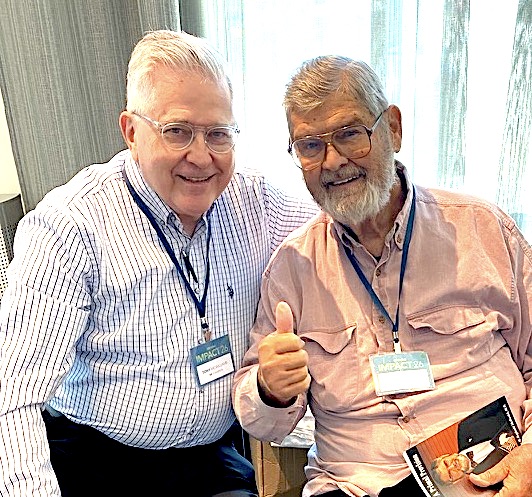
If you’d like to hear more about Acemannan directly from Dr. Reg and explore the information he has assembled, you can visit AcemannanFacts.com.
There are limits to what I can responsibly say about Acemannan because I also market products that contain it. Dr. Reg stands in a very different position. His professional background, his decades of research, and his role as one of the inventors named on the Acemannan patents allow him to discuss the science and its history from a perspective I simply cannot. In other words, Dr. Reg can put all the cards on the table.
Examples 10 Through 19 — Now Watch the Subjects Expand
The breadth becomes difficult to miss.
A chronic foot ulcer.
Trigeminal neuralgia—the severe facial pain sometimes called tic douloureux.
Inflammatory bowel disease, including Crohn’s disease and ulcerative colitis.
Measles.
Vaccine response.
Malabsorption syndromes, including sprue and celiac disease.
Multiple sclerosis.
Chronic fatigue syndrome associated in the cases described with elevated Epstein-Barr antibodies.
These are profoundly different conditions.
And that brings us back to the abstract. To the first sentence.
What do they have in common?
Not the organ involved.
Not the symptoms.
Not the cause.
The inventors were looking for circumstances in which immune response, have I said that already? Where various kinds of immune response like inflammation, infection, cellular communication or tissue repair might matter.
Examples 20 Through 27 — Cancer
Then we hit a remarkable run of cancer-related examples.
An embryonic-origin tumor treated in combination with radiation and chemotherapy.
Extensive liver tumors.
Kaposi’s sarcoma.
Premalignant solar keratoses.
Severe edema following cancer surgery.
Rectal adenocarcinoma treated with 5-fluorouracil.
Colon cancer with liver involvement.
Metastatic prostate cancer treated with multiple drugs and anti-hormone therapy.
Again, notice something.
Many of these cases involved combination treatment.
That means we cannot isolate Acemannan and say it alone produced the outcome.
But the patent frequently does not attempt to.
The broader question was whether Acemannan might serve as an adjunct—something used alongside therapies whose success may also depend upon the patient’s own biological response.
You know, there immune system.
And Then the Patent Gets Even Broader
Examples 28 onward almost read like someone kept asking:
“What else? What else?”
Venomous snake bites.
Aging fibroblasts.
Cholesterol.
Plant injuries.
Hay fever.
Poison ivy.
Chemical hypersensitivity.
Asthma.
Cystic fibrosis.
Cytomegalovirus infection.
The aftereffects of rheumatic fever.
Autoimmune disease.
Systemic lupus erythematosus.
Acute rheumatoid arthritis.
Chronic rheumatoid arthritis.
Depression and anxiety.
Feline leukemia.
Fungal infections in HIV patients.
Pneumocystis pneumonia.
Cryptosporidiosis.
Human tuberculosis.
Mycobacterium avium infection.
Metastatic breast cancer.
Athlete’s foot.
A fire-coral sting.
[DISPLAY FULL LONG LIST]
I’m not going to read all of that again.
Pause here. Look at it.
Take in the breadth of the list
The point is that these scientists kept finding another reason to ask the next question.
And the next one.
And the next one.
What Kind of Patent Is This?
When you step away from the individual examples, a pattern appears.
This patent is really organized around several big biological ideas.
Immune stimulation.
Immune regulation.
Antiviral effects.
Adjunctive treatment.
Tumor response.
Inflammation.
Tissue repair.
Infection.
And interactions between Acemannan and the body’s own defense systems.
The inventors themselves summarized the patent by saying Acemannan had direct stimulatory effects on the immune system and could interact with viruses, infected cells and tumor cells in ways they believed changed how those targets were recognized by the immune system.
That is the thread running through all the apparent diversity.
Return to the First Sentence
Now let’s return to where we began.
“Acemannan has been shown to be effective in treating a number of conditions where the principal mechanism of resolution or cure requires intervention by the patient’s immune system.”
When you first hear that sentence, it sounds almost too broad.
But after seeing these two patents together, we begin to understand the inventors’ reasoning.
They weren’t saying: “One molecule somehow knows how to treat fifty different diseases.”
They were proposing something different.
Many different conditions call upon some of the same innate, built-in, underlying biological systems.
Recognition.
Communication.
Defense.
Inflammation.
Repair.
Immune coordination.
And if Acemannan truly influenced some of those systems, then its possible usefulness might naturally extend across very different biological problems.
That was the hypothesis.
And that hypothesis drove an extraordinary range of experimentation and observation. And we are better for it.
Closing
So what is Patent 5,308,838 about?
It is the uses patent.
If the first patent largely asked:
“What does Acemannan do biologically?”
Then this second patent took the next step:
“Where could those biological effects potentially matter?”
And the answer occupied dozens of pages.
Two figures.
Fifteen tables.
Fifty-one examples.
Viruses.
Cancer.
Inflammatory disease.
Autoimmune disease.
Respiratory conditions.
Wounds.
Opportunistic infections.
Vaccines.
Animals.
Humans.
Even plants.
No, this patent does not settle every question. But, again, the light gets brighter.
This patent definitely makes us feel we might now have something in hand that proves vital and valuable in addressing physiological repair and recovery.
But perhaps that is precisely what makes these two patents so fascinating.
They don’t look like the end of a scientific investigation.
They look like the beginning of a very large one. Where an under girded immune system takes on conditions and maladies of all kinds
After reading this patent, I find it difficult to describe Acemannan as simply “something found in the aloe plant.”
These scientists clearly believed they were dealing with something biologically important, even vital.
And they devoted an extraordinary amount of work to finding out just how important it might be.
I hope you will always be careful to maintain good works to meet urgent needs and become heroes to your generation.