I recently learned something important about how scientific research is sometimes published. I’ll tell more about that shortly. That realization led me to take a closer, more careful look at a study examining diabetes, cognitive health, and the biological impact of Aloe vera inner leaf gel and its active component, Acemannan. The following research will point to markers that help to reveal how diabetes can disrupt health and how targeted interventions may restore some balance. What follows is a step-by-step walkthrough of the data, highlighting how Aloe vera gel (rich in Acemannan) performed alongside insulin and what these findings suggest about metabolic control, neuroprotection, and the broader relationship between blood sugar regulation and brain health. Join me again as we dig deeper and reach wider.
Before diving into the findings of this study, it’s important to clarify something I learned along the way about how scientific research is often published. Large experiments—whether it involves animals or people—are sometimes analyzed from multiple angles and released as separate scientific studies over time. These studies may share the same subjects, baseline measurements, and starting data, while focusing on different outcomes such as metabolism, cognition, or brain chemistry. When encountered independently, this can make later publications look suspiciously familiar or even redundant. Initially, that was my reaction to the study we’re about to examine. As a result, I left this study on the shelf for a while until I learned better. This came with further investigation that revealed it was not a case of duplication, but rather a continuation of analysis from the same experimental framework. Understanding this helps explain why certain values—such as blood sugar levels and body weights—match those reported in an earlier study. A case in point is a published study I already curated at this link with those same preliminary statistics: https://hopequestglobal.com/acemannan-and-neuroprotection-behavioral-and-biochemical-effects-in-diabetic-rats/ With that context in mind, we can now focus on what this scientific study at hand reveals about diabetes, brain health, and the role of Aloe vera and Acemannan. That study is titled: Effect of Aloe vera on the Expression of Nerve Factors, p75 and TrkA Receptors in the Hippocampus of Diabetic Rats
Diabetes mellitus is a chronic condition where the body struggles to regulate blood sugar levels. Over time, high blood sugar can damage various organs, including the brain. One area affected is the hippocampus, a region crucial for memory and learning. We are now taking a look at a study that introduced Aloe vera inner leaf gel and its active component, Acemannan, into the picture to see what happens on the diabetic and cognitive side of both these issues.
Scientists gave 25 male rats a chemical called streptozotocin (STZ) to make them diabetic. STZ damages cells in the pancreas that produce insulin, the hormone that helps control blood sugar
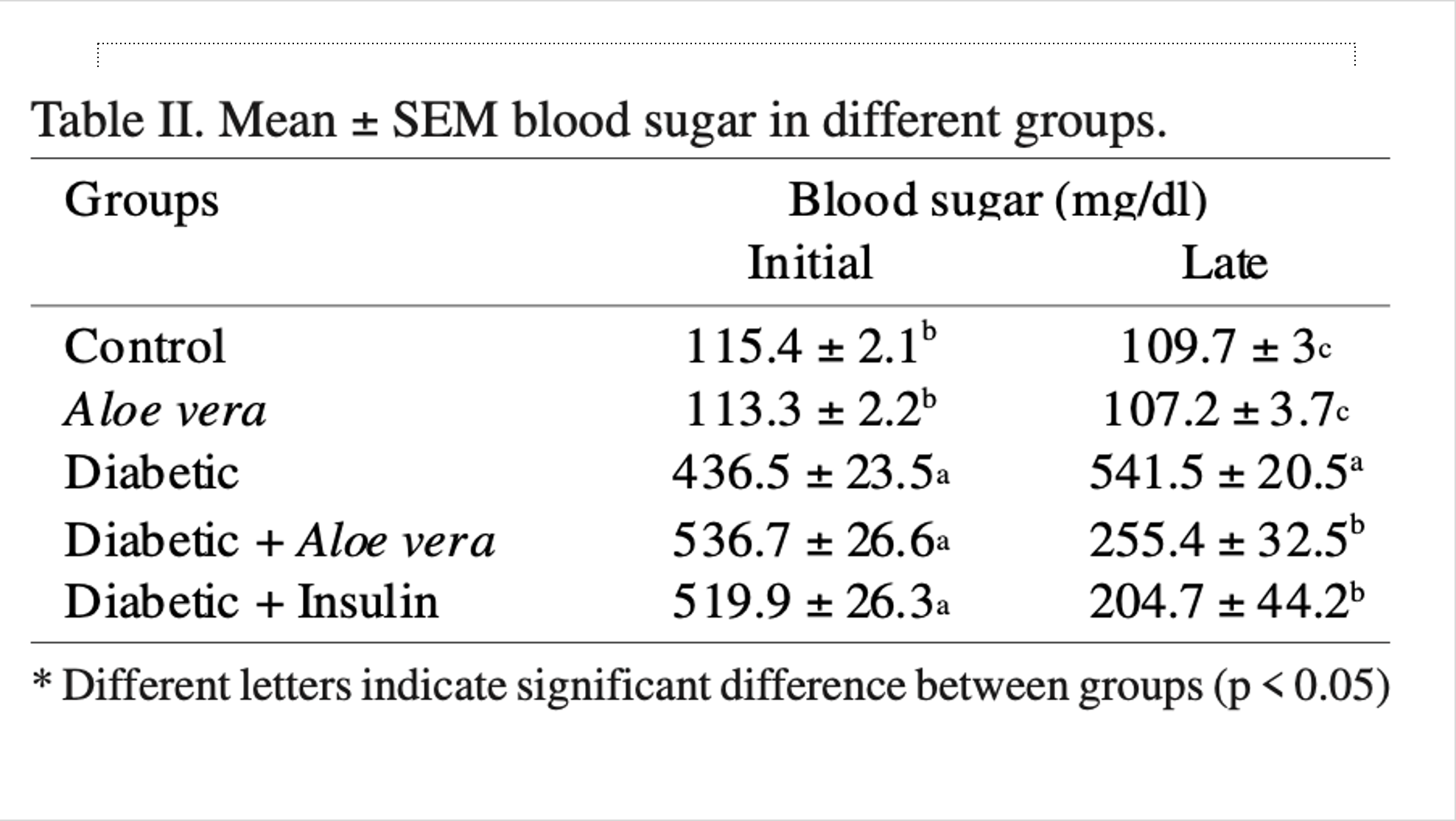
- But let’s look at a table from the study that displays the statistics.
- The Control group of lab rats, those healthy rats that were not manipulated in any way (measured in at a blood sugar level of 115 mg/dl and 8 weeks later at 109.
- Then there was the Aloe vera (Acemannan) group. These rats were given Aloe vera gel only. Started at 113 mg/dl and ended at 107. Both of these were in the normal range. The control group and the Acemannan only group.
- The Diabetic only group, had a blood sugar of 436 and it went up at the 8-weeks mark to 541.
- Then they took group of diabetic rats and added the Acemannan of aloe gel. Their blood sugar went from 536 down to 255.
- Then they took diabetic rats and gave them insulin (the common treatment for diabetes). They went from 519 down to 204.
- Both Aloe vera (Acemannan) and insulin helped to take high blood sugar rates downward.
- The SEM the (Standard Error of the Mean) is how much the average result might vary if the experiment were repeated multiple times. It tells us how sure we can be about the average we measured.”
- I’ll explain the p< 0.05 shortly
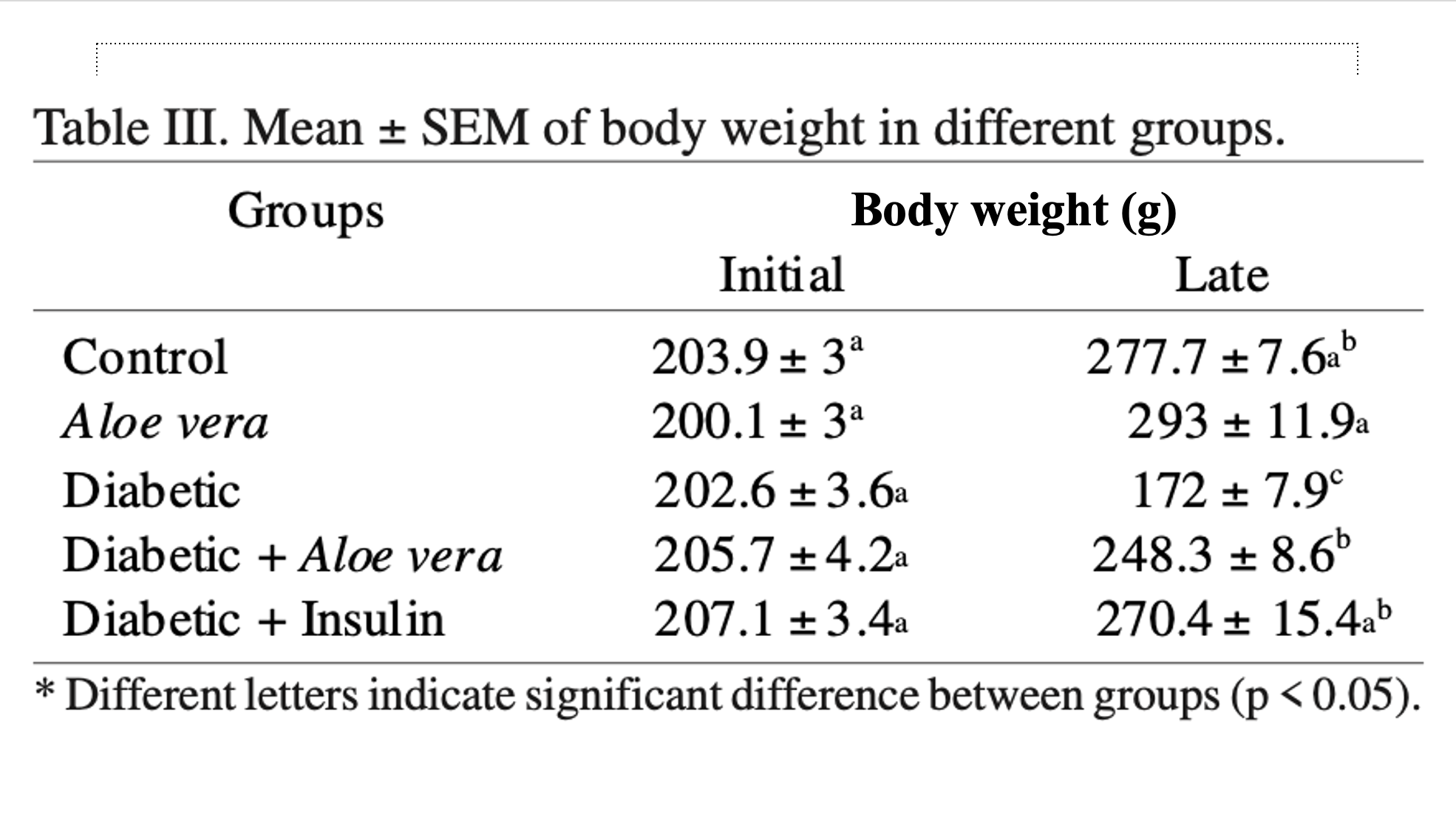
Scientists also evaluated weight changes in these rats.
Healthy rats gained weight normally during the 8-week study (from about 203 grams to 277 grams).
Healthy lab rats given Aloe vera (acemannan) only also gained weight normally from 200 grams to 293.
The diabetic rats lost weight from 202 grams down to 172 grams. This represents a typical weight-loss pattern of uncontrolled diabetes.
But the diabetic rats given Aloe vera (acemannan) gained weight from 205 to 248. A reflection of something more normal.
And in like manner the diabetic rats given insulin gained weight from 207 to 270. Also, normal.
Diabetic rats that received Aloe vera gel (Acemannan) or insulin; their weight stayed more stable and close to normal. Aloe vera and insulin both helped prevent the unhealthy weight loss caused by diabetes. Healthy rats that received Aloe vera also gained weight, but not more than healthy rats who didn’t—so Aloe vera gel didn’t cause unusual weight gain.
What we are noticing in the experiments so far is that Aloe vera gel worked almost as well as insulin helping to take the numbers in the same direction as the insulin.
What does p < 0.05 mean? The “p” stands for “probability.”
The number 0.05 represents 5%.
So p < 0.05 means that there’s less than a 5% chance that the difference in the results we see here happened by random chance. This is indication that the researchers consider this information as statistically significant. It’s called the p-value.
Blood sugar levels and weight changes are perhaps the most obvious thing to measure when you are dealing with diabetic related issues, but the researchers also measured changes in brain proteins. At the end of the 8 weeks researchers studied brain tissue from the hippocampus—a part of the brain that helps with learning and memory. They looked at three key proteins that affect nerve health:
NGF – Nerve Growth Factor
TrkA Receptors (tropomyosin receptor kinase A)
p75 Receptors, short for p75NTR
Let’s start with NGF (Nerve Growth Factor)
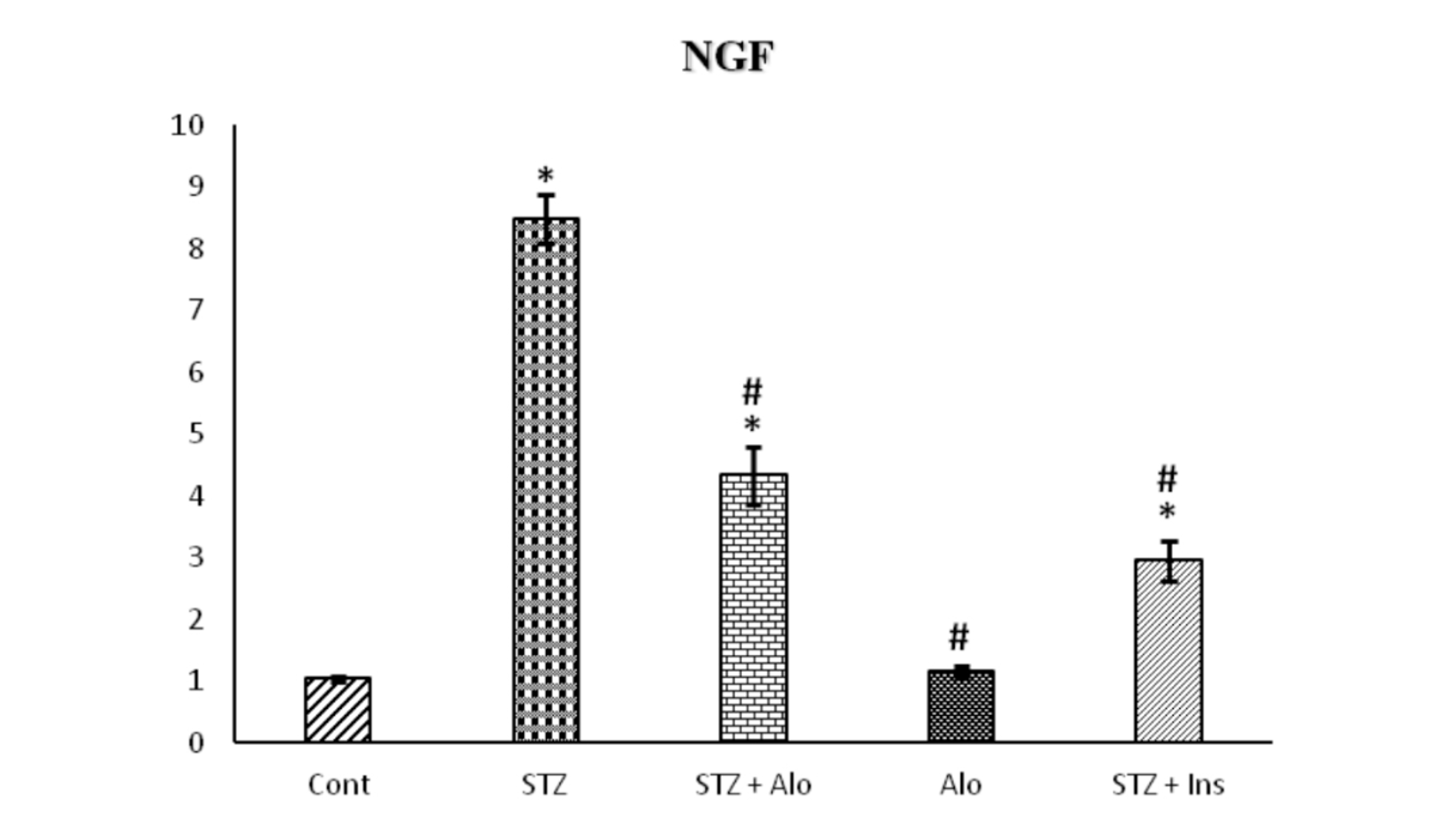
NGF is like “fertilizer” for nerve cells—it helps them grow and stay alive. But, in like manner to the general idea of fertilizer is that you don’t want too much. This is the NGF reading of healthy rats and the Acemannan only application is the same. Then there is the diabetic rats. Notice that it is labeled in this figure from the study as STZ. These are the diabetic rats.
In diabetic rats, NGF levels in the brain were much higher than in healthy rats—about 8 times higher.
But in diabetic rats that were treated with Aloe vera (Acemannan), NGF levels dropped by about half—and with insulin in diabetic rats it dropped just a bit more so.
Next is TrkA.
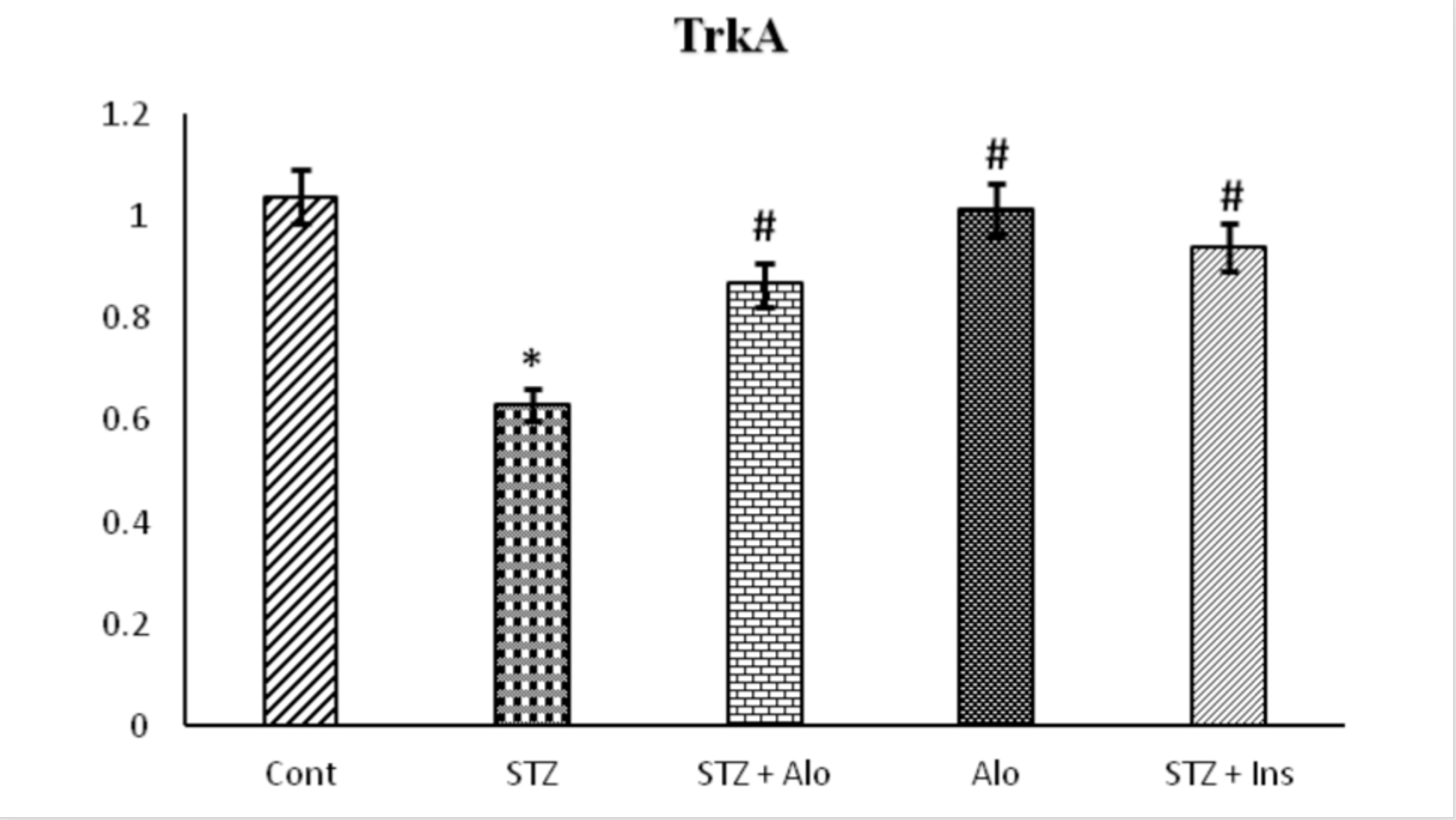
- TrkA (tropomyosin receptor kinase A) is a receptor. Think of it as “docking station” or “receiver” on a nerve cell that helps nerve cells receive signals from NGF.
- The control model established the normal level for healthy rats. And the aloe vera (acemannan only) rats were about the same.
- In diabetic rats, TrkA levels went down, which could make it harder for nerve cells to survive.
- Diabetic rats that got Aloe vera (Acemannan) had increased TrkA levels, leaning back toward normal.
- Aloe vera helped restore these important receptors, just like insulin did.
And next is p75 receptors
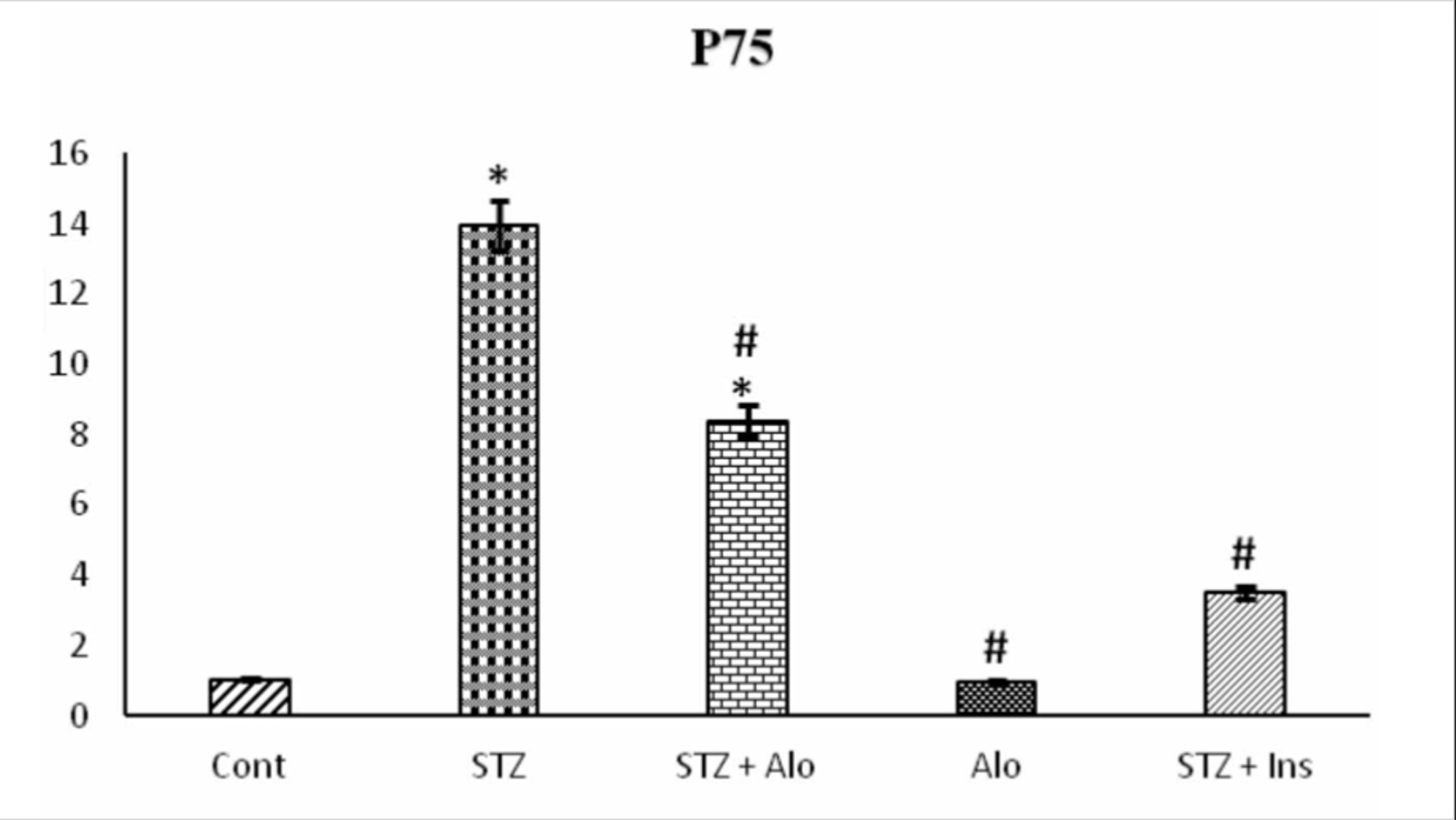
- The p75 receptor is another receiver for NGF, but it can trigger nerve cell death if levels get too high.
- Here is the measurement from the healthy (control group) rats with the aloe vera (Acemannan) at the same level. I’ll pause for just a moment to point out one thing we have visited and revisited in the studies covered at this website that Acemannan consistently contributes no toxicity, and is why the Acemannan group consistently matches the control group.
- Then there is the diabetic rats. They had a huge increase in p75—about 14 times higher than in healthy rats!
- Then in diabetic rats that also received Aloe vera (Acemannan) we see these levels down significantly, showing it may contribute to protecting nerve cells from dying.
- Aloe vera (Acemannan) was not as effective as insulin in lowering p75 receptor levels, but the measurements moved in the right direction.
Final Takeaway
- Aloe vera (Acemannan) contributed to reduced blood sugar, it helped rats maintain a healthier weight, and balanced important brain proteins that affect nerve survival.
- It worked almost as well as insulin in many cases, sometimes better, depending on the test.
- These results suggest that Aloe vera gel may help protect the brain from diabetes-related damage and support nerve health.
Research supports the idea that high blood sugar and diseases that affect the brain and nerves may be connected through an imbalance in a special protein called NGF, or Nerve Growth Factor. This protein helps keep nerve cells healthy. Two other parts called P75 and TrkA are like NGF’s “helpers” or “messengers.” When NGF and these helpers are out of balance, it can lead to brain damage, especially in diabetes. But treatments like Aloe vera (Acemannan) and insulin seem to help. Aloe vera gel may protect brain cells, while insulin lowers blood sugar and helps fix the NGF balance. More research is needed to better understand the biological mechanisms behind these improvements.
This study adds to a growing body of research showing that diabetes affects far more than blood sugar alone—it disrupts brain health, nerve signaling, and metabolic balance. Across multiple measurements, Aloe vera inner leaf gel, rich in Acemannan, consistently moved outcomes in a healthier direction: lowering blood glucose, stabilizing body weight, and helping rebalance key nerve-related proteins in the brain. While insulin remains the standard treatment, Acemannan demonstrated comparable benefits in many areas and did so without signs of toxicity. With all the research deliberated, these findings suggest Acemannan is not a fringe compound or passing curiosity, but one that warrants serious scientific consideration. As research continues to accumulate, Acemannan increasingly stands out as a biologically active compound with meaningful implications.
I hope you will always be careful to maintain good works to meet urgent needs and become heroes to your generation.
0 Comments